2026-07-02
What Is This White Fuzzy Stuff on My Plant? Mealybugs vs Mildew vs Mold
White fuzz on a plant is one of four things, and they split cleanly into two pests and two fungal issues. The mistake people make is treating all of them the same way. A pest spray does nothing to mildew, and a fungicide does nothing to a mealybug. Identify first, and the fix is straightforward.
Where the fuzz sits tells you what it is
| Where the white stuff is | What it is | Pest or fungal |
|---|---|---|
| Cottony clumps in leaf joints and stem crevices | Mealybugs | Pest (insect) |
| Powdery dusting on the top surface of leaves | Powdery mildew | Fungal |
| Fluffy white masses on stems and bark, often outdoors | Woolly aphids | Pest (insect) |
| White fuzz on the soil surface, not the plant | Saprophytic mold | Fungal, harmless |
Mealybugs: the cottony clumps that move
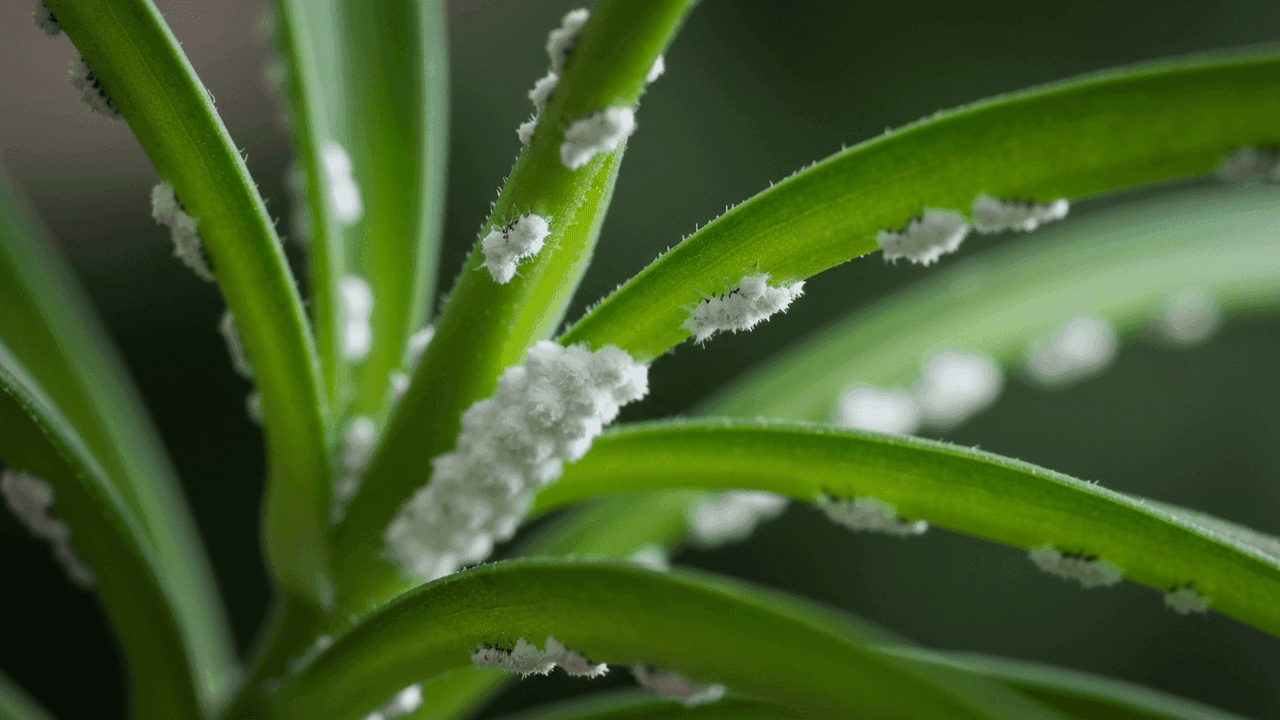
Mealybugs are the most common answer for houseplants. They look like tiny blobs of cotton wool tucked into the joints where a leaf meets the stem, on the undersides of leaves, and around new growth. The giveaway that they are insects, not fungus, is that if you wipe one it smears and reveals a soft pinkish body underneath, and the leaves nearby feel sticky from honeydew.
Fix: dab each one with a cotton swab dipped in 70% isopropyl alcohol, which dissolves their waxy coat on contact. Then spray the whole plant with insecticidal soap or a neem solution every 5–7 days for a month, because the crawlers and eggs hide in the potting mix and root crown. Isolate the plant from your others, since mealybugs walk between touching leaves. This is a patience game more than a hard one.
Powdery mildew: a dusting you can wipe off
Powdery mildew is a fungal coating that looks like someone dusted the leaf with flour. It sits flat on the leaf surface, spreads in circular patches, and rubs off with a finger (though it comes back). It thrives in warm days, cool nights, crowded plants, and poor airflow, and unlike most fungi it does not need wet leaves to take hold.
Fix: improve airflow, thin crowded growth, and avoid wetting the foliage. Spray a potassium-bicarbonate fungicide, or a home mix of one teaspoon baking soda plus a few drops of dish soap per liter of water, weekly. Remove the worst-hit leaves. It is manageable but rarely fully eradicated once established, so prevention (spacing and airflow) matters most.
The other two
Woolly aphids show up outdoors on shrubs and trees as fluffy white tufts on stems and branches. They are aphids wearing a waxy wool coat, so they leave honeydew and attract ants and sooty mold, same as regular aphids. Treat them like any aphid: a strong water blast, then insecticidal soap or neem on a weekly cycle.
Soil mold is the white fuzz that appears on the surface of potting mix, especially on peat-heavy soil that stays damp. It is a harmless saprophytic fungus feeding on organic matter, not a threat to the plant. Scrape it off, let the top inch of soil dry between waterings, add a little airflow, and top-dress with a thin layer of grit or sand. It is a symptom of overwatering, not a disease.
When the identifier helps
The mealybug-versus-mildew call is the one worth getting right, and a close photo through the plant identifier settles it fast: cottony 3D clumps in the joints are the insect, a flat powdery film on the leaf surface is the fungus. Once you know which, the treatments above do not overlap, so identifying correctly is most of the battle.